Solar PV protection is easiest to manage when it is planned before the array output reaches the distribution board. A DC combiner box gives designers and installers a controlled point where strings can be grouped, protected, isolated and monitored.
For commercial and industrial systems, this is not just about tidier cabling. It helps create a clearer protection strategy from the modules through to the inverter, AC switchgear and wider electrical installation.
What a DC combiner box does in a solar PV system
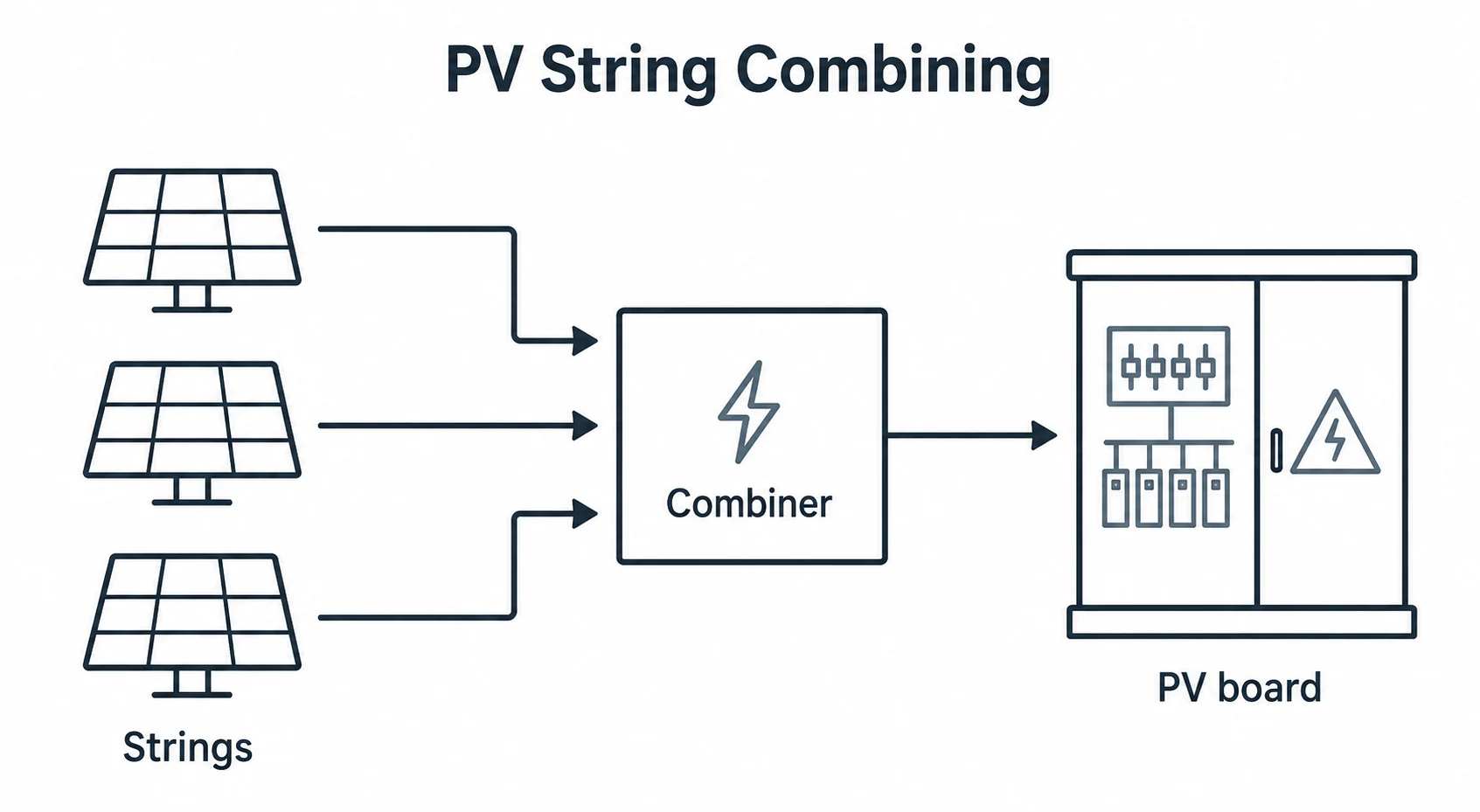
A DC combiner box brings multiple PV strings into one enclosure so their outputs can be combined before onward connection to the inverter or associated PV switchgear. Instead of every string travelling separately through the installation, strings are terminated, protected and arranged in a defined location.
This matters because a solar array is made up of repeated circuits. Each string has its own current path, its own fault considerations and its own isolation needs. When these circuits are left to be dealt with later in the system, the protection design can become harder to inspect, harder to label and harder to maintain.
A well planned combiner box supports the array at the DC stage. It can include string fusing where required, surge protection, local isolation, terminals, monitoring and clear circuit identification. The exact specification depends on the array design, inverter requirements, cable routes and applicable electrical standards.
DSH Cables supplies DC string junction combiner boxes for solar PV installations where string grouping and protection need to be built into the switchgear approach from the start.
Why string grouping should happen before the distribution board stage
The distribution board is not the first place where PV protection decisions should begin. By the time power reaches that stage, the design should already have dealt with how DC strings are grouped, isolated and protected.
String grouping gives structure to the upstream side of the PV system. It helps installers understand which strings are connected, which circuits are protected together and how each part of the array can be isolated for inspection or maintenance. This is especially useful when arrays are split across several roof areas, orientations or inverter inputs.
Without a clear grouping strategy, fault finding can become less direct. A technician may need to trace more cable routes, confirm more terminations and spend longer proving which part of the array is affected. With a combiner box, the design gives them an organised point of reference.
Good grouping also helps keep the downstream equipment focused on its role. A PV distribution board can then be specified around the AC side, metering, isolation and outgoing ways, while the DC combiner box deals with the string side before conversion.
Protection devices that are commonly planned into combiner boxes
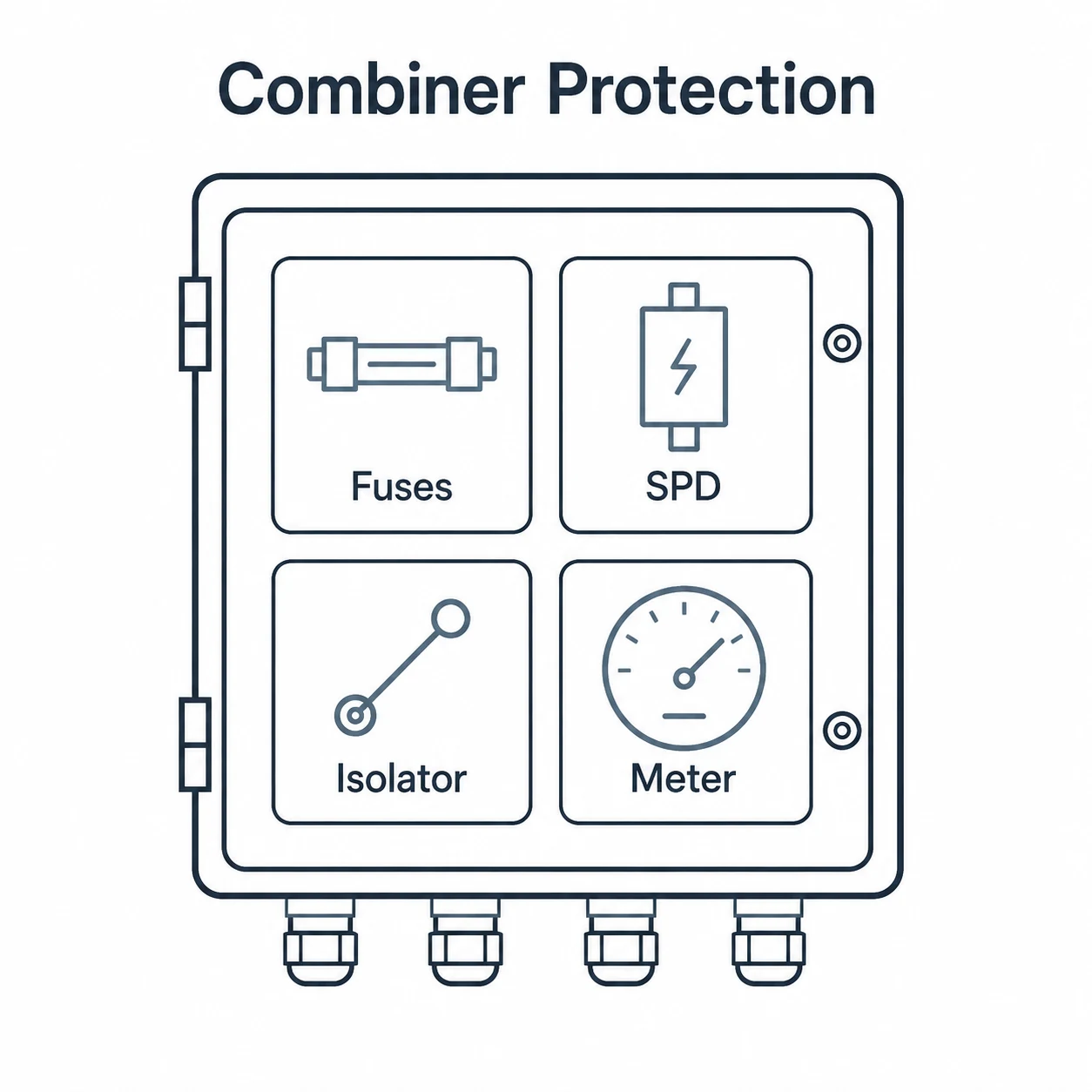
The contents of a combiner box should match the electrical design rather than follow a generic template. Common elements may include string fuses, DC isolators, surge protection devices, terminals, monitoring links and warning labels. Each item has a practical purpose.
- String fuses: These can protect individual strings where reverse current risks need to be controlled.
- DC isolation: Local isolation allows sections of the array to be made safe for inspection, testing or maintenance.
- Surge protection: Surge protection devices help protect connected equipment from transient overvoltage events.
- Terminals and cable management: Clear termination points make installation, inspection and future maintenance more straightforward.
- Labelling: Circuit identification helps engineers understand what each string serves and how the system is arranged.
The key point is coordination. Protection devices should be selected with the inverter, array layout, cable size, earthing arrangement and site electrical design in mind. The combiner box is part of a system, not a standalone accessory.
How isolation improves maintenance and fault finding
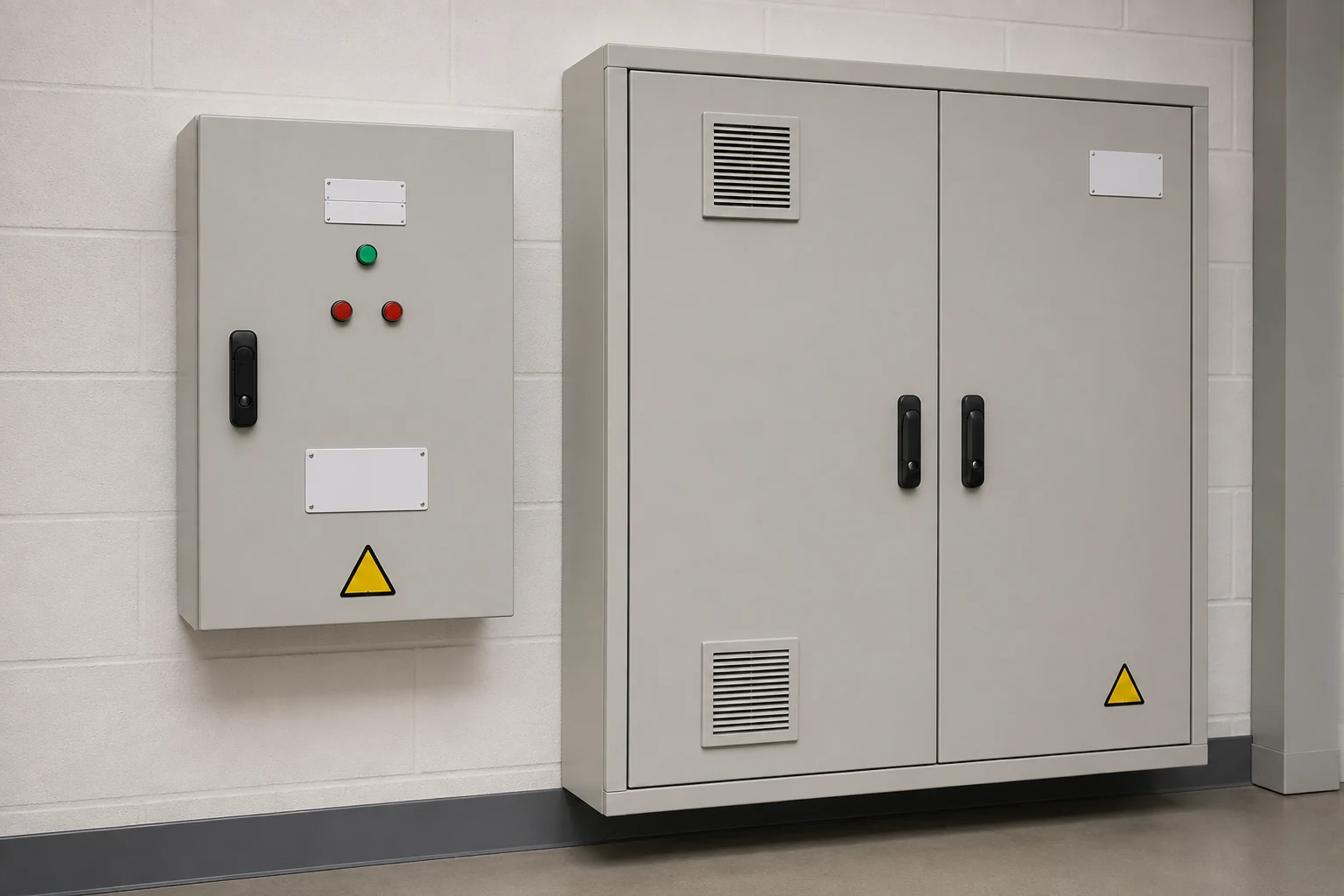
Solar PV systems need to be maintainable as well as operational. Isolation is one of the main reasons combiner boxes are so useful. They allow a design to include defined points where parts of the DC circuit can be separated safely and logically.
When engineers can isolate a group of strings, they can test and inspect with greater confidence. They can compare string performance, identify open circuit or low output issues, and narrow down problems without treating the whole array as one indistinct source.
Clear isolation also helps with planned works. If equipment needs to be inspected, replaced or tested, the system layout should make it obvious which devices control which circuits. This reduces ambiguity and supports safer working practices.
For readers looking at the wider switchgear layout, DSH Cables has also covered why solar PV installs need dedicated distribution boards, including the importance of separating PV electrical infrastructure from general site distribution.
Design considerations before specifying a combiner box
A useful combiner box starts with the array design. The number of strings, module ratings, inverter inputs, maximum voltage, current levels and cable routes all affect the specification. The enclosure must also suit the installation environment and provide enough space for safe termination and future access.
Designers should also consider how the combiner box will interact with export limitation, G99 relay panels, AC isolators and the PV distribution board. These are separate parts of the electrical design, but they need to work together as a coherent system.
Documentation is another important factor. Circuit schedules, labelling, schematics and inspection access all help the finished installation remain understandable after handover. A combiner box should make the system easier to read, not just easier to wire.
Where the project needs a bespoke layout, enclosure size, metering arrangement or interface with other control equipment, it may be worth reviewing what to consider before ordering a custom control panel.
Where combiner boxes fit into a complete PV switchgear strategy
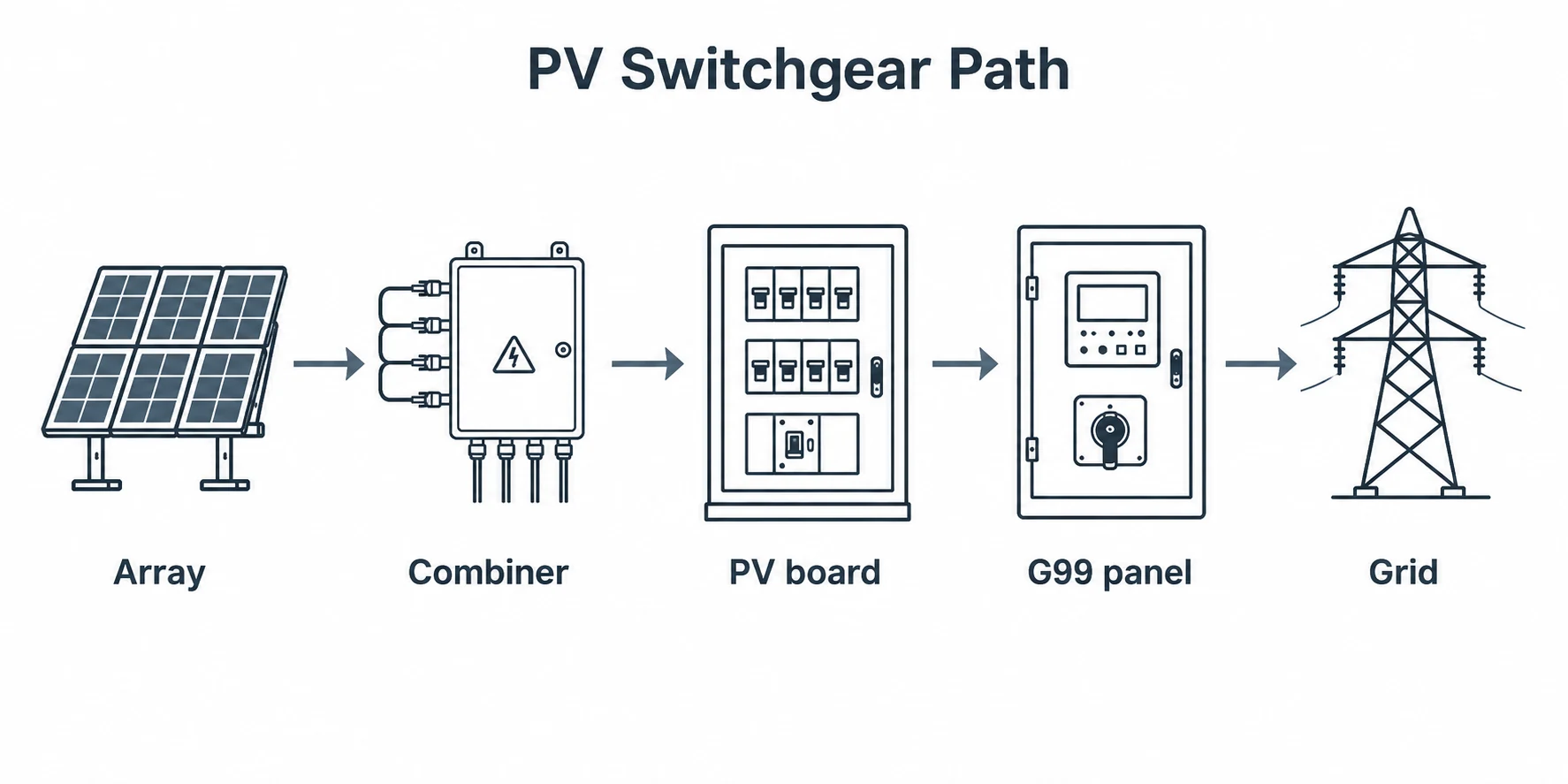
A DC combiner box is one part of the route from solar modules to useful electrical output. It sits upstream of the inverter and helps prepare the DC side of the installation for controlled conversion and distribution.
After the inverter, the AC side may include AC isolators, metering, G99 protection, export limitation equipment and PV distribution boards. Each item has its own function, but the system works best when these functions are coordinated during design.
This is why combiner boxes should be discussed early. If string grouping, protection and isolation are left until late in the project, the switchgear design may have to adapt around avoidable constraints. Early planning gives the manufacturer and installer a clearer basis for cable entry positions, device selection, labelling and enclosure layout.
For commercial and industrial PV systems, that clarity is valuable. It supports installation quality, makes future maintenance more direct and gives the electrical design a more logical structure from the array through to the point of connection.
- DC combiner boxes group PV strings before power reaches the inverter or distribution board.
- They provide a defined place for string protection, isolation, termination and labelling.
- Early planning helps the PV distribution board and AC switchgear perform their own roles more clearly.
- The right specification depends on the array design, inverter inputs, cable routes and protection requirements.
- Clear string grouping makes inspection, testing and maintenance more straightforward.
Frequently asked questions
Is a DC combiner box needed on every solar PV system?
Not always. The need depends on the array size, inverter arrangement, number of strings and protection design. Larger or more complex systems are more likely to benefit from a dedicated combiner box.
What is the difference between a combiner box and a PV distribution board?
A combiner box deals with DC string grouping and protection before the inverter. A PV distribution board usually sits on the AC side and deals with distribution, isolation, metering or outgoing circuits after conversion.
Can a combiner box include surge protection?
Yes, surge protection can be included where the design requires it. Device selection should be based on the electrical design, cable routes, earthing arrangement and connected equipment.
Why is labelling important in a combiner box?
Labelling helps engineers identify strings, protection devices and isolation points. This supports safer inspection, clearer fault finding and easier maintenance over the life of the PV system.
Plan your PV string protection properly
If you are specifying solar PV switchgear, DSH Cables can help with practical combiner box and PV distribution board solutions built around the system design.