Solar PV is not just a set of panels on a roof. Once generation reaches the building, it has to integrate safely with the existing low-voltage electrical distribution.
A dedicated PV distribution board gives that connection a clear, controlled home. It helps electricians, facilities teams and inspectors understand how the solar installation is protected, isolated, metered and maintained.
What a PV distribution board does
A PV distribution board brings together the AC side of a solar installation after the inverter. It can house protective devices, switching, metering, labelling and termination points in one purpose-built enclosure, rather than spreading PV equipment across an already busy installation.
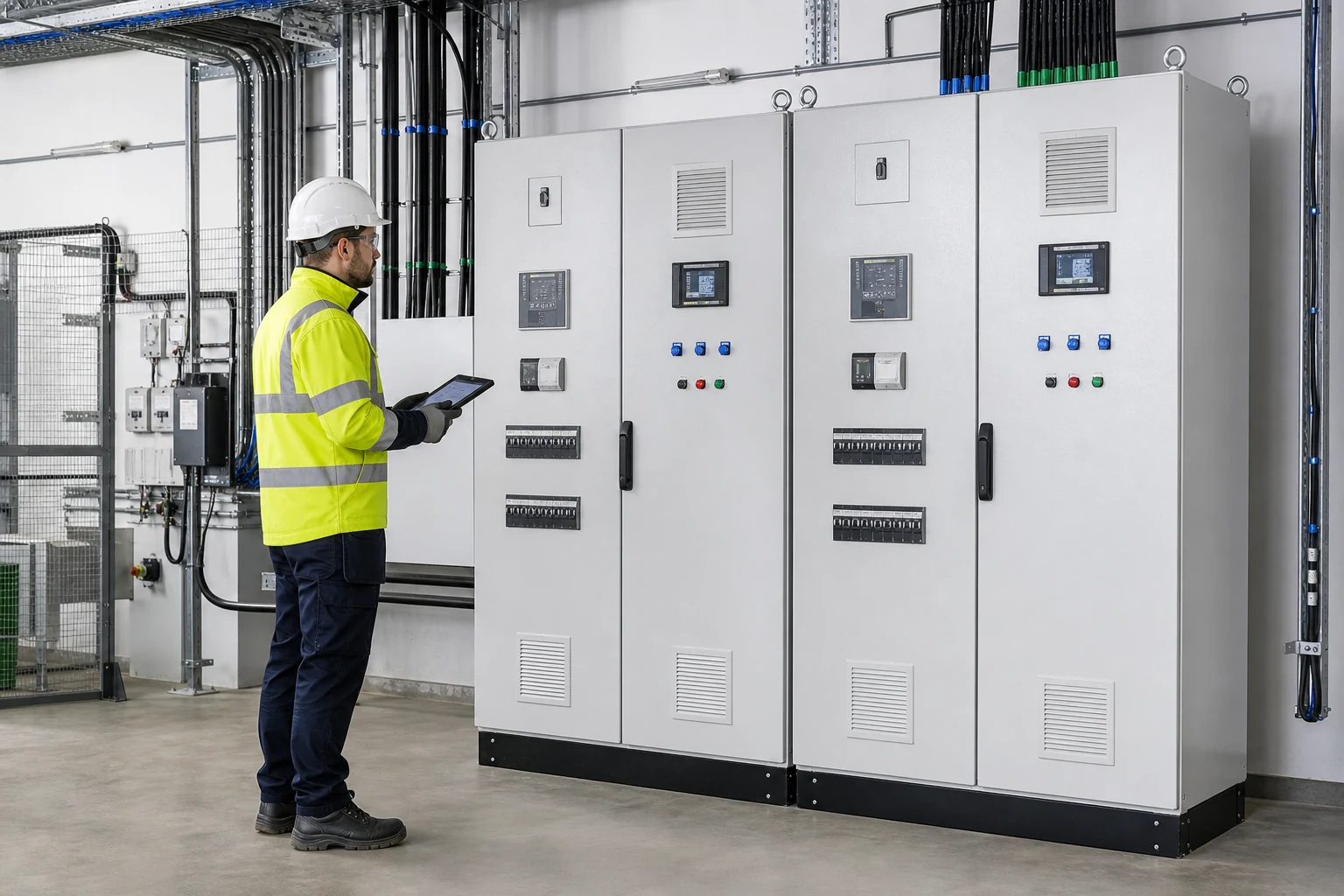
In a commercial or industrial setting, this matters. The board may sit in a plant room, switchgear area or electrical cupboard where multiple people need to understand the system quickly. Well-designed purpose-built PV distribution boards make the generation connection visible, logical and easier to manage throughout the life of the installation.
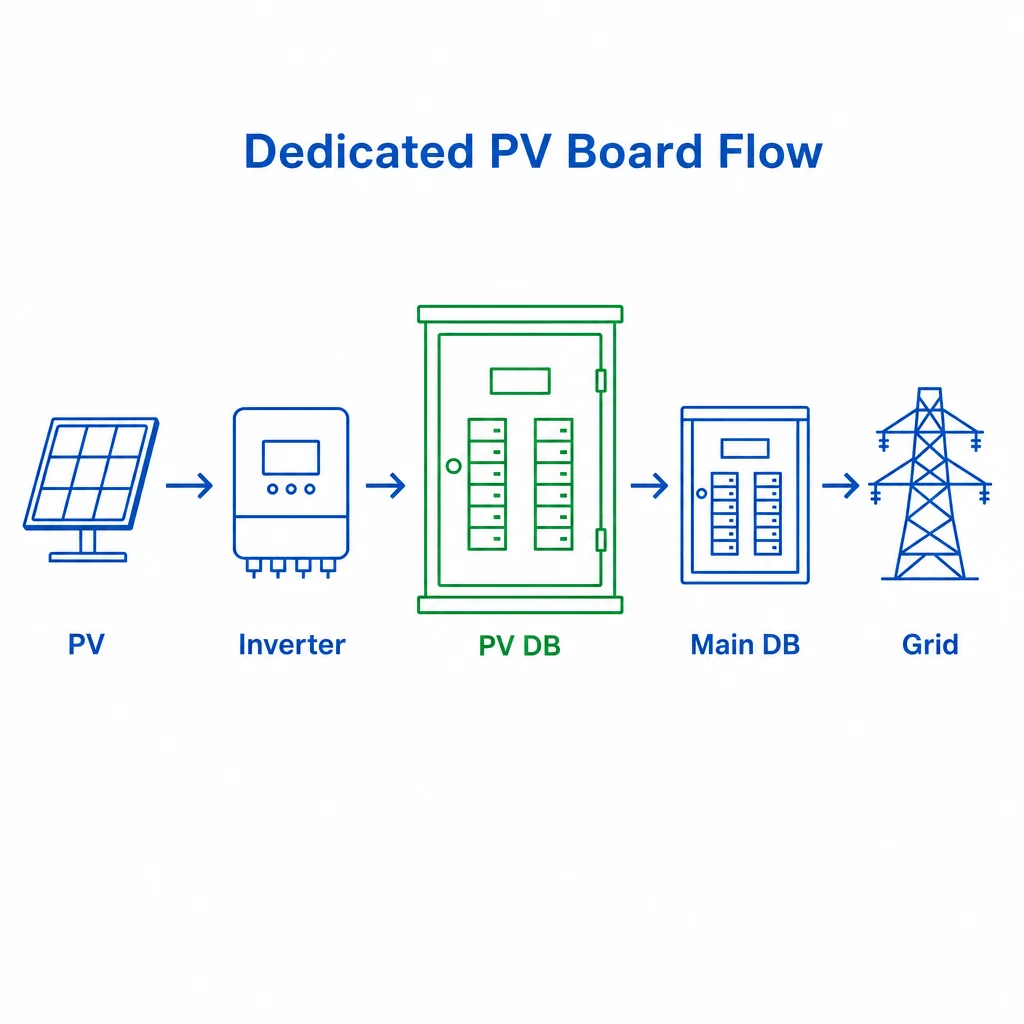
Why not simply connect into an existing board?
Some existing distribution boards have spare ways, but that does not automatically make them the best place for a solar connection. Traditional boards are usually designed around outgoing loads. Solar introduces generated power, possible backfeed conditions, different labelling needs and additional isolation requirements.
A dedicated board gives the PV system separation from general building circuits. It can provide space for suitable devices, neat cable routing, clear warning labels and room for future inspection. It also reduces ambiguity: when someone opens the cabinet, the PV equipment is grouped and identifiable rather than hidden among unrelated final circuits.
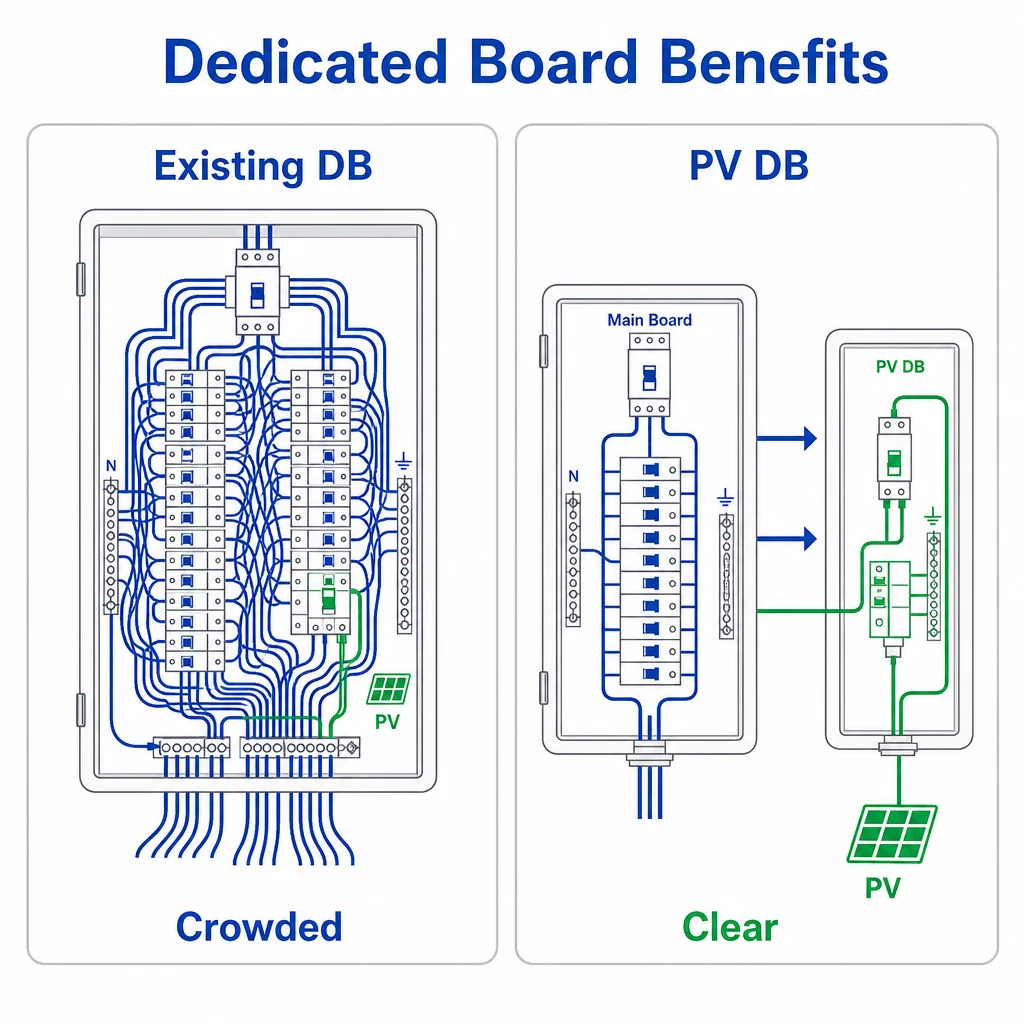
Safety, isolation and protection
Safe integration depends on correct protection and switching. The board design should consider current ratings, fault levels, cable sizes, earthing arrangements, discrimination with upstream devices and any project-specific requirements from the electrical designer.
Isolation is also important. Clear local switching allows competent persons to safely shut down the PV AC output for maintenance, testing or fault finding. Where required, dedicated AC isolators for PV systems can sit alongside the distribution arrangement so the system is straightforward to operate and identify.
Larger systems may also need interface protection, export limitation or monitoring equipment. Bringing these functions into a planned enclosure helps keep the installation tidy and reduces the risk of unclear, improvised additions later.
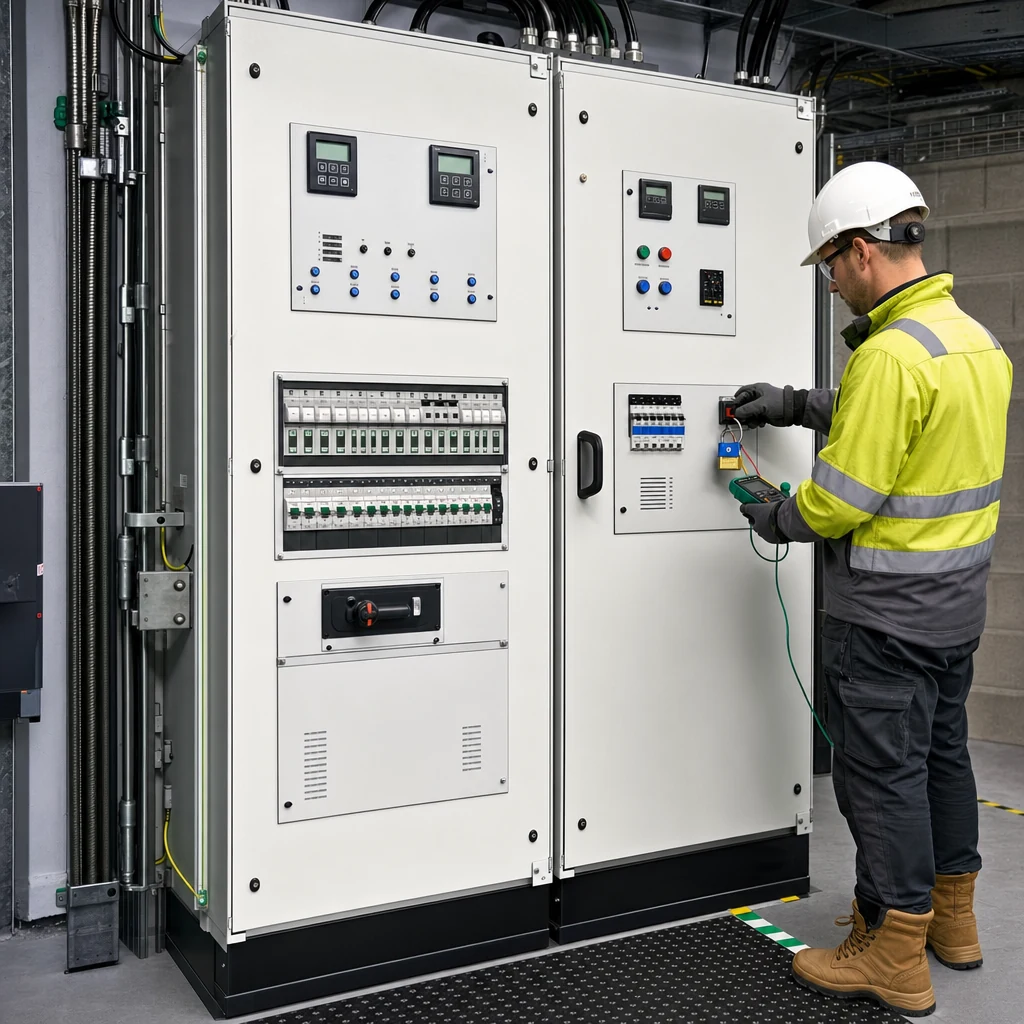
Making maintenance easier
A good PV distribution board is not only about first installation. It should support ongoing inspection, testing and operation. Clear labelling, accessible devices, durable terminations and visible meters all help facilities teams understand what is happening without unnecessary disruption.
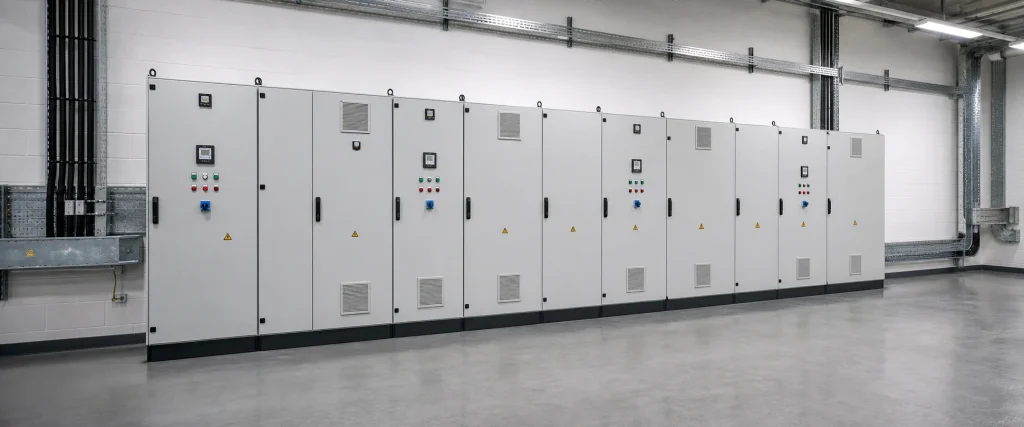
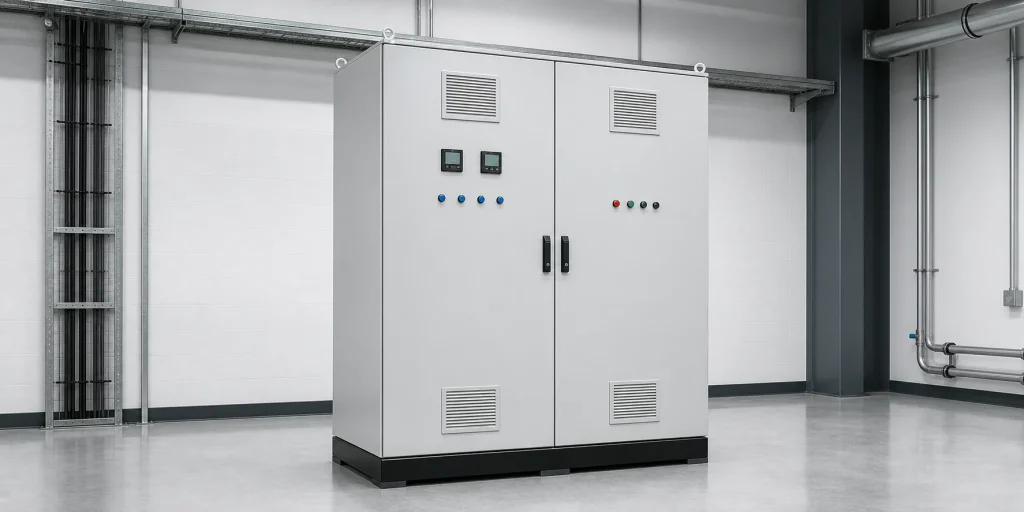
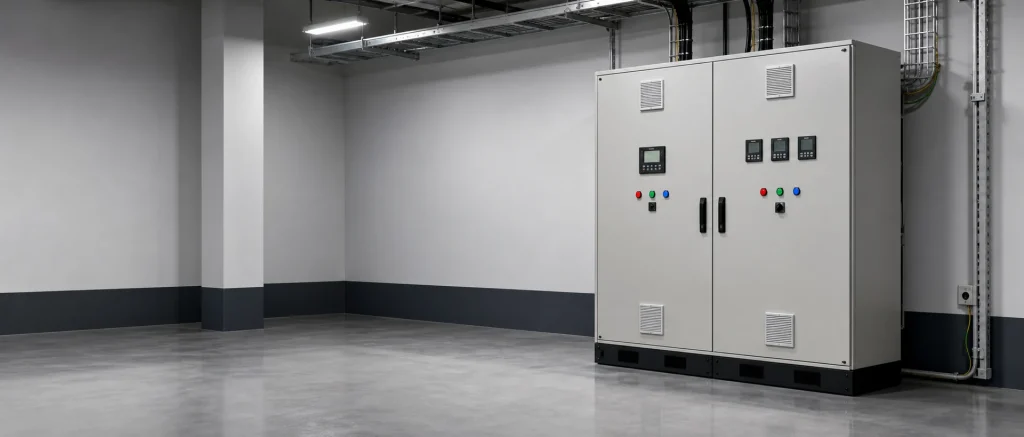
Digital meters, red and green controls, push buttons, ventilation grilles and circuit-breaker sections can all have a role when specified correctly. If generation needs to be measured separately from normal consumption, contractor metering panels may also form part of a wider metering strategy.
The result is a cleaner electrical installation: easier to inspect, easier to explain and easier to hand over.
Design details that make the difference
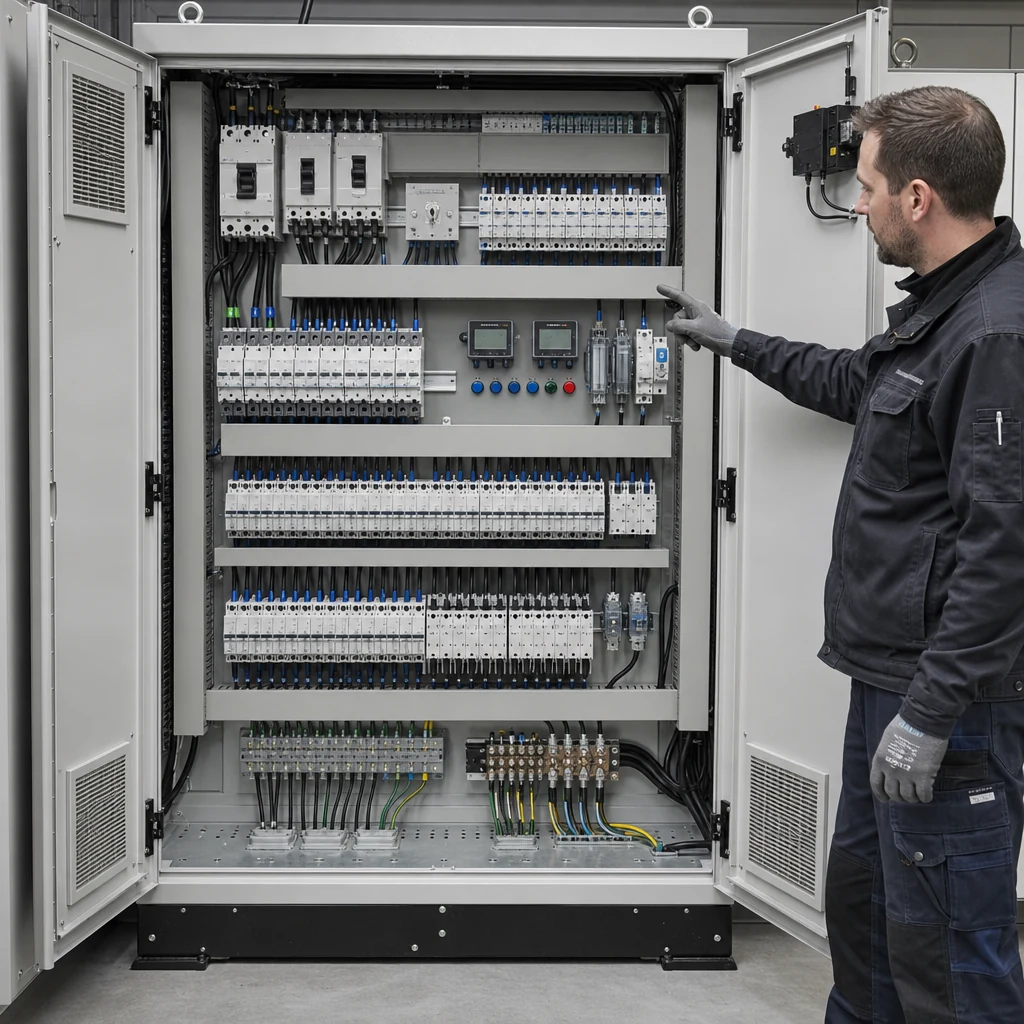
Useful PV distribution board design starts with the electrical requirements, but the physical build is just as important. Enclosure size, cable entry, door access, ventilation, plinth height and lifting provision all affect how well the board works on site.
Internal layout should give adequate space for busbars, protective devices, cable bends and future access. Where bespoke shrouding, barriers or internal components are needed, busbar and acrylic fabrication can help create a safer, more serviceable arrangement. Pre-made cable assembly can also support consistent terminations and a neater installation.
The best boards look simple when installed because the design work has already dealt with the complexity.
- Dedicated PV boards give solar generation a clear point of connection.
- They support safe isolation, protection, labelling and maintenance.
- Good design considers both electrical performance and practical site access.
- Purpose-built enclosures help avoid confusing or crowded switchgear layouts.
Frequently asked questions
Is a dedicated PV distribution board required for every solar installation?
Not always. Smaller systems may be suitable for connection into existing distribution, subject to design checks. For many commercial and industrial installations, a dedicated board is the clearer and more maintainable option.
How does a PV distribution board relate to the inverter?
The inverter converts DC power from the panels into AC power. The PV distribution board manages the AC connection into the building’s electrical distribution, including protection, switching and metering where specified.
Can export limitation equipment be included?
Yes, where the project requires it, export limitation and associated monitoring or control equipment can be considered as part of the overall panel arrangement.
When should the board be designed?
Ideally, it should be considered early in the electrical design. This helps coordinate ratings, space, cable routes, isolation points and future maintenance access.
Planning a PV connection?
DSH Cables can help with practical, well-organised PV distribution board solutions for safe solar integration.